
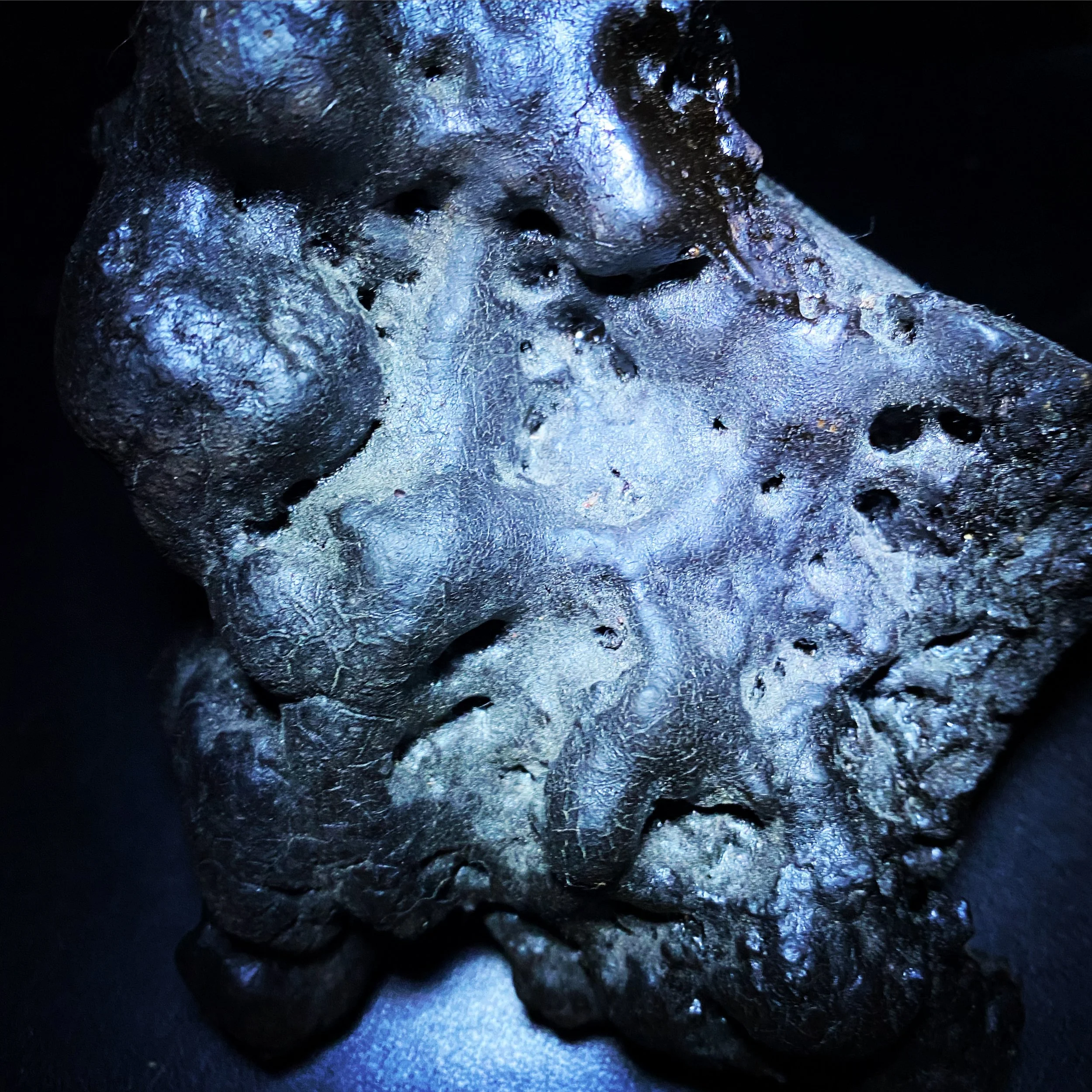
From the Jemez Mountains.
A year in the making.
Wild-foraged shilajit resin, gathered and prepared by hand in New Mexico. A small batch with a long story.
One-ounce jar · $30
Flat-rate U.S. shipping · $15
Slowly prepared. Carefully gathered.
I gathered this shilajit in the Jemez Mountains and processed it myself, without heat. The preparation took a full year to reach this dark, glossy resin consistency.
Prepared by Tina Trout · LaLa and the Go Goats
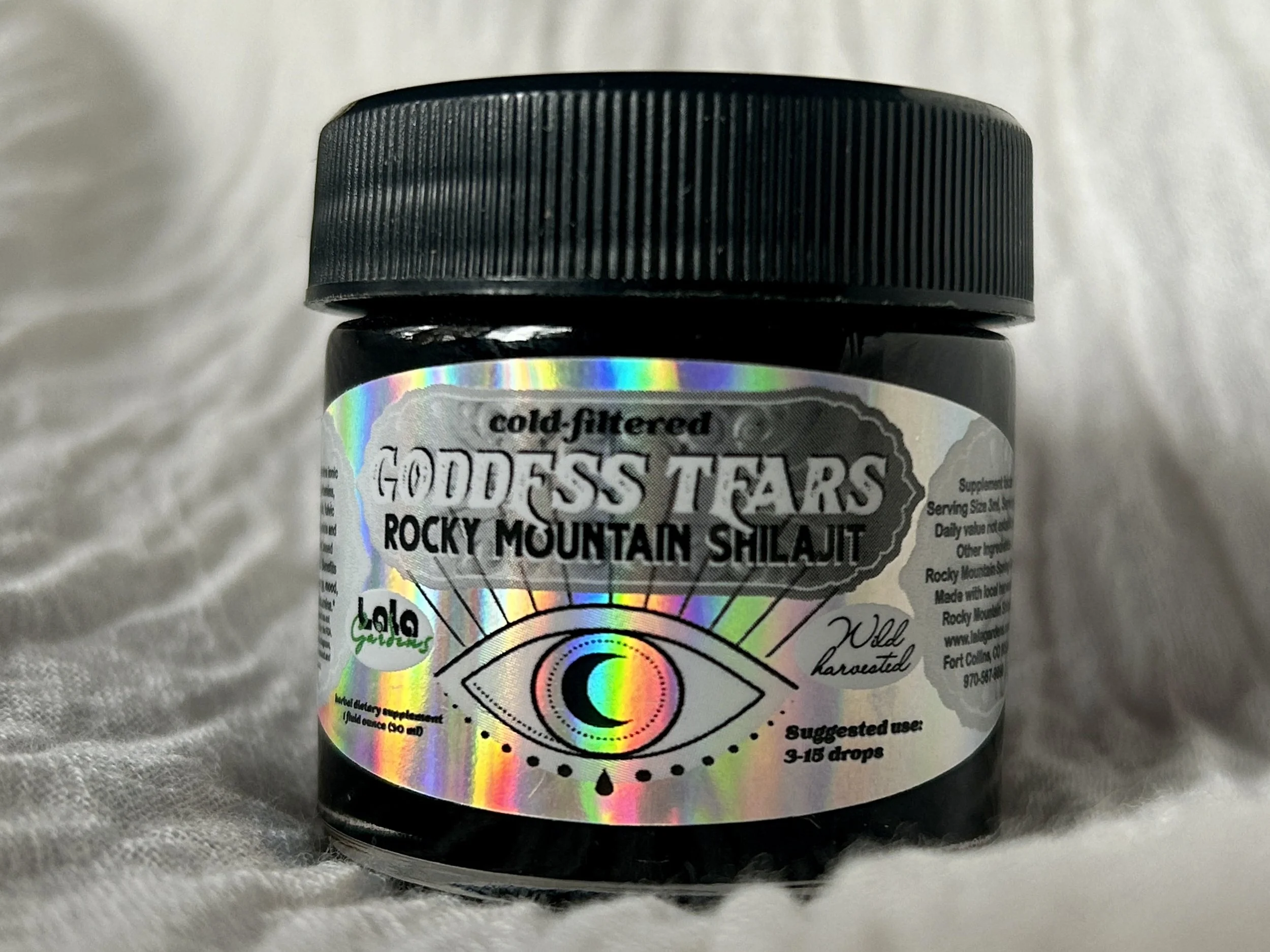
Wild-foraged shilajit resin from the high country of the Jemez Mountains in New Mexico.
I foraged and processed this batch myself, without heat. The slow process took a full year to bring it to this dark, glossy resin consistency. It is offered in the traditional resin form of shilajit; each jar contains 1 oz.
I’ll share the source and preparation details I have for this batch, along with any available testing information identified by its sample date and scope.
Price: $30 per jar. U.S. flat shipping: $15.
In process
I gathered this shilajit in the Jemez Mountains and diluted it in water. I returned to stir it as the water evaporated without heat.
The slow evaporation concentrates a mineral and organic matrix as the material thickens. Its ionic makeup and other properties are questions for testing. This video catches the physical change partway through the year it took to reach the dark resin consistency in the jar.
LaLa and the Go Goats · Jemez Mountains
What they say.
What the research is finding.
Shilajit comes with an extraordinary collection of claims. I’m following the research alongside my own gathering, preparation, and laboratory testing—asking what was tested, what changed, and what remains to be understood.
Stay with me as I question The Blackest Lie—a quest for shilajit’s origin story and a search for truth amid fiction.
The studies below examined specific preparations. Their findings don’t demonstrate the same effects for this Jemez batch.
Follow the claims
Testosterone and hormone support
What they say
Shilajit raises testosterone and restores hormonal balance.
What holds up
A randomized, double-blind, placebo-controlled study tested purified shilajit in men aged 45–55, using 250 mg twice daily for 90 days. It reported increases in total and free testosterone and DHEAS.
That’s a specific finding in a defined population. It doesn’t establish universal hormone balancing, effects in women, or equivalent effects from a different preparation.
Sperm count, fertility, and sexual function
What they say
Shilajit improves fertility, libido, erectile function, and sexual performance.
What holds up
A study enrolled 35 men with low sperm counts; 28 completed treatment with processed shilajit. Improvements in semen measures were reported.
Without a placebo group, the study provides a preliminary signal. Changes in sperm measures don’t establish improved pregnancy rates or treatment for erectile dysfunction, premature ejaculation, or low libido.
Exercise fatigue, strength, and recovery
What they say
Shilajit builds strength, prevents fatigue, and accelerates recovery.
What holds up
A placebo-controlled study of 63 recreationally active men tested a standardized extract for eight weeks. At 500 mg daily, a subgroup with greater starting strength had a smaller decline in isometric strength after a fatiguing exercise protocol.
This supports a narrow exercise-fatigue finding. It doesn’t establish generalized strength gains, athletic recovery across activities, growth-hormone stimulation, or an anabolic effect.
Cellular energy and chronic fatigue
What they say
Shilajit restores mitochondria, raises ATP, and reverses chronic fatigue syndrome.
What holds up
A processed, standardized preparation affected behavioral and biochemical measures in a rat fatigue model, including measures related to mitochondrial function and stress physiology.
This is a reason to study mechanisms. An experimentally induced rat condition doesn’t establish treatment for human ME/CFS or explain every report of increased energy.
Bone density and fracture healing
What they say
Shilajit preserves bone and speeds fracture repair.
What holds up
A 48-week placebo-controlled trial in 60 postmenopausal women with osteopenia reported less bone-density loss with a standardized extract.
Separately, a 160-patient tibial-fracture trial reported mean bone-union times of 129 days with momiai and 153 days with placebo. The reported statistical result was close to the conventional significance threshold.
These are meaningful clinical leads that need replication and interpretation specific to the preparations studied.
Read the bone-density study · Read the fracture-healing study
Memory, tau, and Alzheimer’s disease
What they say
Shilajit improves memory and prevents or reverses Alzheimer’s disease.
What holds up
Fulvic acid inhibited tau aggregation and altered tau fibrils in a laboratory experiment.
That experiment didn’t test whether an oral Jemez preparation delivers an active concentration to the human brain. The sequence from ingestion to absorption, metabolism, brain exposure, and meaningful cognitive benefit remains to be demonstrated for this material.
Antioxidants and inflammation
What they say
Shilajit neutralizes free radicals and lowers inflammation throughout the body.
What holds up
The bone-density trial measured changes in oxidative-stress and inflammatory markers alongside its bone outcomes. Those observations concern that preparation and population.
A chemical antioxidant assay, a blood-marker change, symptom relief, and disease treatment are separate outcomes.
A 2025 study of multi-ingredient combinations also reported results that didn’t support reduced chronic-inflammation markers.
Read the bone-density trial · Read the combination-supplement trial
Skin, collagen, and aging
What they say
Shilajit renews skin, removes wrinkles, heals wounds, and preserves youth.
What holds up
An oral-supplementation study examined skin gene expression and microperfusion in adult women. Another examined muscle gene expression.
These can inform research into tissue responses. They don’t by themselves establish visible wrinkle reduction, wound healing, longer life, or reversal of aging.
Blood sugar, cholesterol, and circulation
What they say
Shilajit controls diabetes, repairs pancreatic cells, improves cholesterol, and protects the heart.
What holds up
A 2025 randomized trial studied combinations of shilajit, chromium, and Phyllanthus emblica alongside diet and exercise. Some cardiometabolic outcomes were favorable, while other outcomes weren’t.
Combination results can’t establish that shilajit alone produced a change, nor do they demonstrate pancreatic regeneration or reversal of diabetes. Each proposed use needs its own direct evidence.
What happens through digestion?
Before the material is gathered
Woodrat digestion can transform plant chemistry.
In a controlled feeding experiment, two woodrat species ate different junipers. Researchers identified different patterns of urinary plant metabolites, reflecting differences in biological processing associated with species and diet.
This gives the amberat inquiry a concrete biochemical starting point. It doesn’t establish which compounds persist during midden aging or occur in the finished Jemez resin.
Read the study: Schramm, Skopec, and Dearing, 2024
After the material is consumed
Digestion can release, alter, or remove compounds. Activity may arise from absorbed molecules, their metabolites, or interactions within the gut.
Water solubility describes dissolution; it doesn’t measure absorption or delivery to a target tissue.
A 2026 preliminary study compared three commercial shilajit samples after simulated gastrointestinal digestion, then examined selected microbial groups and enzyme activity in a laboratory gut model.
Responses differed by sample. The richest measured phenolic profile didn’t produce the most favorable gut-related response.
This supports examining the whole mixture and its transformations. It doesn’t establish clinical gut benefits or intact absorption in humans.
Read the study: From Phenolic Profile to Gut Function, 2026
What oral trials can tell someone
When a controlled oral trial finds an effect, it shows that the administered preparation can produce that measured response under the study conditions. It doesn’t identify the active molecule automatically.
Matching effects across two materials can suggest a shared pathway worth testing. Chemical identity and equivalent potency require direct comparison.